Canopies & Walkways
- All Canopies & Walkways
- Fabric Canopies
-
Polycarbonate Roof
Canopies - Covered Walkways
- Enclosed Canopies
- MUGA Canopies
- Timber Canopies
- Entrance Canopies
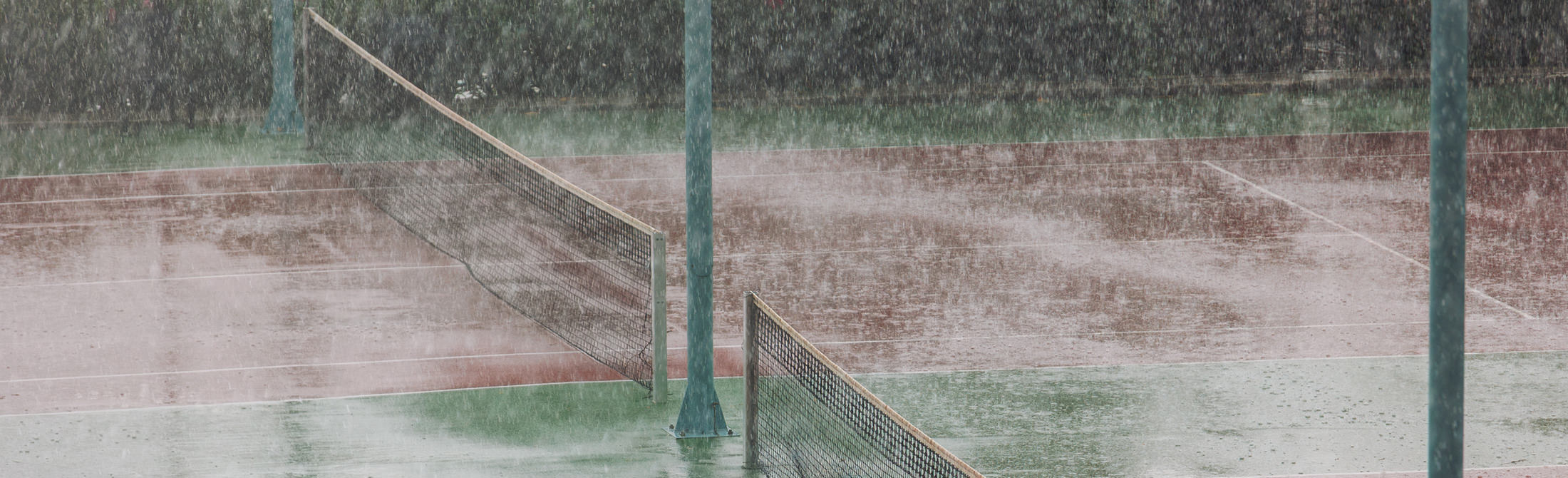
Winter weather worries? Designing school sites that work year-round
Winter disruption in UK schools rarely comes from extreme weather, but rather, from ordinary cold, wet and windy days that impact routines, capacity and access across our education sites.
Rainfall, low temperatures and reduced daylight are normal conditions across much of the school year, yet many sites are ill-equipped to maintain “business as usual” when the weather turns, due to a lack of adequate provision and cover. The result is a series of small, cumulative pressures that most schools recognise immediately.
Increasing pressure on school facilities, unpredictable British weather and a renewed focus on outdoor learning and pupil wellbeing, mean that more and more school leaders are reconsidering their site and how well it truly functions, come rain or shine.
Without the appropriate cover, when winter weather strikes:
Morning arrivals become compressed and harder to supervise
On wet and windy mornings, pupils and parents cluster tightly around entrances. Without sheltered waiting or covered circulation, congestion increases and visibility drops. Staff are required to manage larger groups in smaller spaces, quietly raising safeguarding and supervision pressure before lessons even begin.
Breaktimes lose their “pressure release” function
Outdoor breaks play a critical role in releasing energy and resetting behaviour in all school settings. When playgrounds are unusable or partially restricted due to weather, pupils are pushed into corridors, halls and classrooms instead. Overcrowding increases, alongside noise levels. This is particularly challenging in settings where routine and space are closely linked to behaviour.
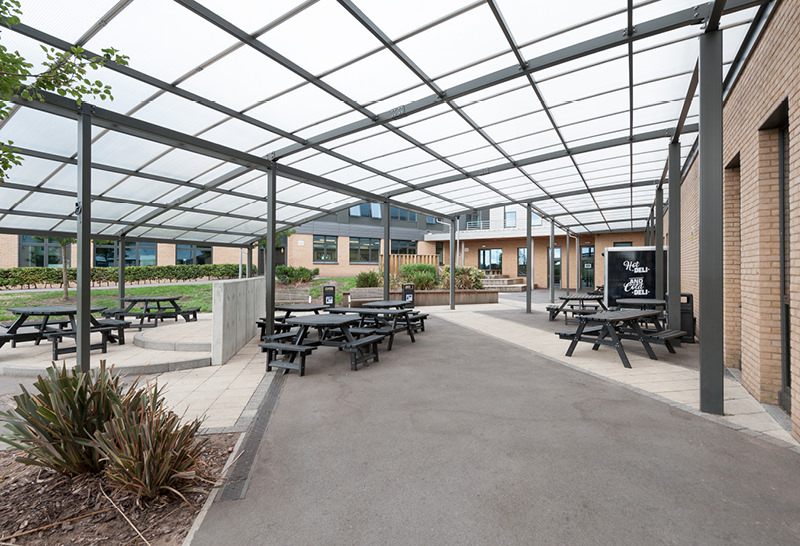
Evidence shows that this loss of outdoor breaktimes has wider consequences. Children in the UK can experience up to 4,000 breaktimes over the course of their primary and secondary education, making these moments a critical part of behaviour, wellbeing and social development if the environment supports them. Yet national evidence shows that time spent outside has declined by 50% in a generation, despite the clear benefits of outdoor play and unstructured time.
Learning through Landscapes report that regular access to outdoor space supports resilience, self-esteem and emotional health, helping pupils to regulate behaviour and return to lessons more focused and settled.
When the weather removes access to outdoor space, schools lose one of the few remaining pressure-release environments that allow pupils to socialise, reset and manage energy levels naturally.
PE lessons and coaching is disrupted
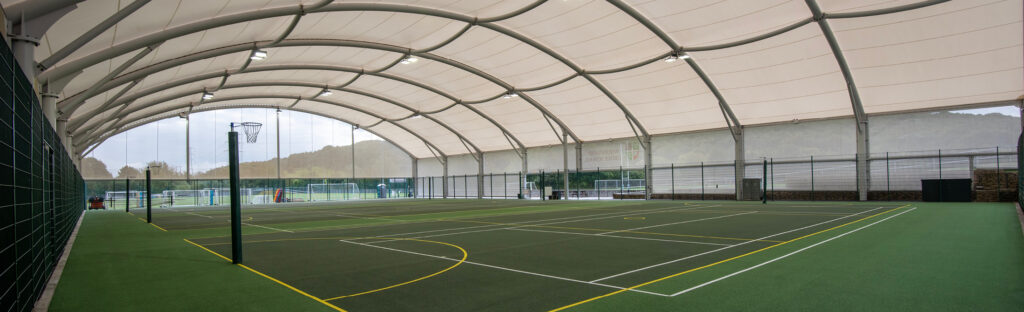
Winter weather regularly disrupts outdoor PE lessons. Schools routinely lose significant outdoor PE and coaching time due to rain, wind and shorter daylight hours, forcing frequent compromises that reduce consistency in provision and access. Timetables are adjusted at short notice, activities are moved indoors, or sessions are shortened altogether. This creates knock-on effects for hall availability, staffing and curriculum balance. Sport England has repeatedly identified weather and access to suitable space as barriers to consistent physical activity in schools.
Transitions between buildings slow the school day down
Many school sites rely on external movement between classrooms, dining areas and sports facilities. In winter, uncovered routes impact calm transition times, with journeys around site taking longer, involving slip hazards and potential bottlenecks or crushing as pupils re-enter school buildings.
Staff workload quietly increases
Individually, these issues may feel manageable but collectively, they add up. Wet weather routines, additional supervision, timetable adjustments and reactive problem-solving all draw time and energy away from teaching and pastoral support.
According to the Met Office, the UK experiences rainfall on around 150-160 days each year on average, making wet conditions a regular operational reality rather than an exception. Rather than planning around unpredictable conditions, many settings are now rethinking the ways their external space can function year-round with Streetspace Structures.
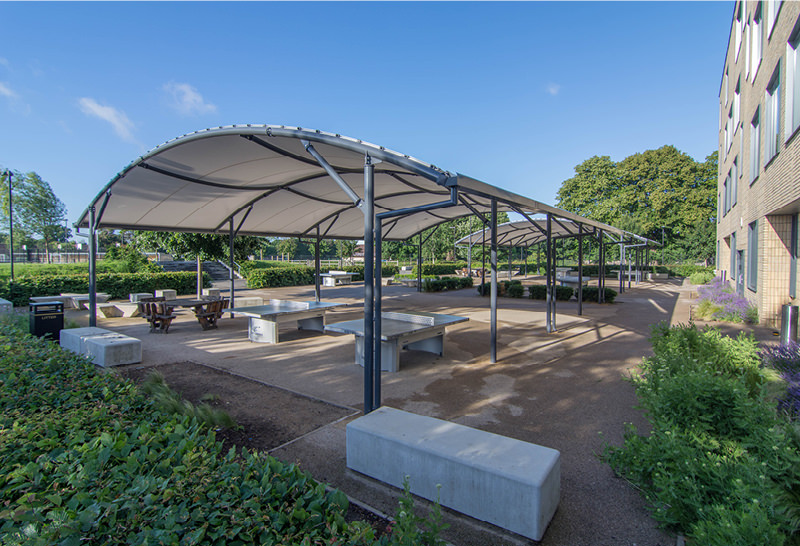
For many schools, covered canopies and shelters offer a cost-effective alternative to traditional building projects, delivering usable, all-weather space without the time, disruption or capital cost associated with full new build extensions.
We’re seeing that even on restricted sites, by expanding or repurposing available space and investing in appropriate covered areas, pupils and staff are able to utilise their sites fully.Covered external space is increasingly being used to support arrivals, movement and play, supporting safe movement throughout site and smooth operation, year-round. Covered walkways, playground shelters and open or enclosed structures, allow schools to maximise the space available to them.
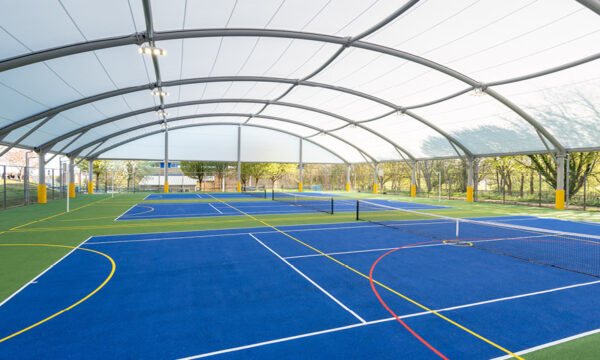
In addition, covered sports canopies are becoming a strategic investment for education providers, addressing the increasing pressure on school facilities, lost coaching time and a renewed focus on pupil fitness, health and wellbeing.
See how schools are approaching covered external space as part of wider estates and capacity planning and view our latest case studies.