Canopies & Walkways
- All Canopies & Walkways
- Fabric Canopies
-
Polycarbonate Roof
Canopies - Covered Walkways
- Enclosed Canopies
- MUGA Canopies
- Timber Canopies
- Entrance Canopies
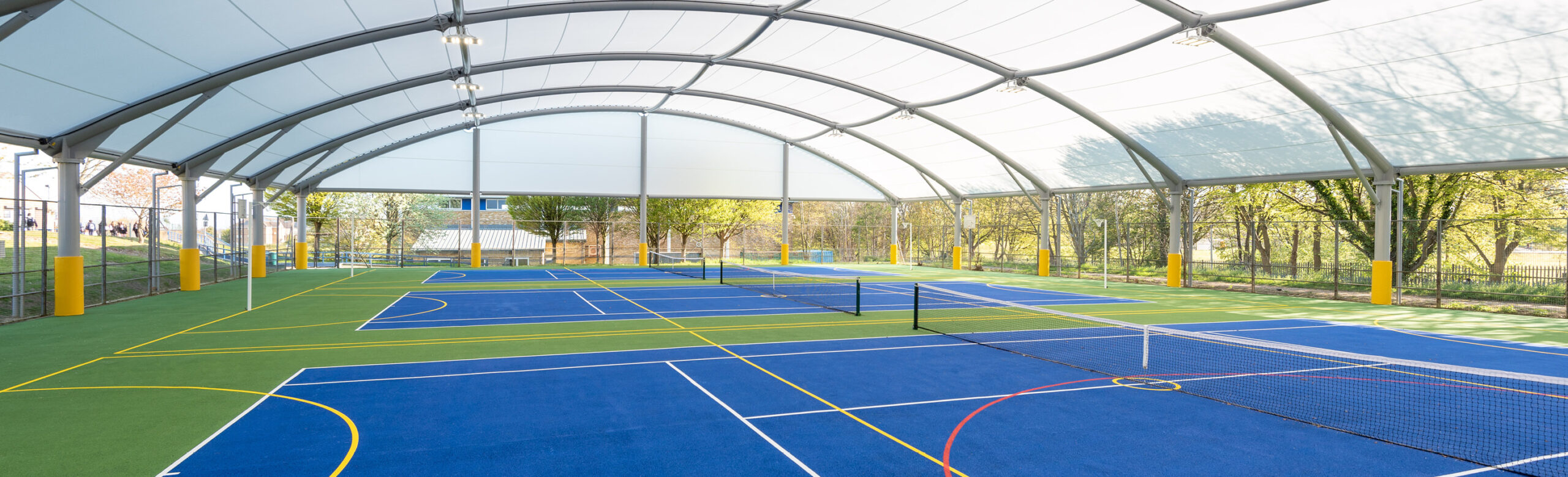
Covered Sports Canopies for Schools
With increasing pressure on school facilities, unpredictable weather and a renewed focus on outdoor learning and pupil wellbeing, covered sports canopies are becoming a strategic investment for education providers.
Also known as Multi-Use Games Area (MUGAs), these structures provide reliable all-weather space for sport, PE, outdoor learning and community activity. We’ve seen that they are increasingly being considered alongside new build extensions, as a cost-efficient alternative to traditional builds.
These canopies help schools address a wider challenge: children today spend far less time outdoors, engaging in physical activity than previous generations. Outdoor environments play a vital role in focus, resilience and social development. Studies show that time spent outside and engaging in physical activity can improve memory, attention and mood.
By creating dependable, weather-resilient outdoor space, covered canopies make it much easier for schools to embed these benefits into everyday routines, rather than limiting sport and outdoor activity to favourable conditions.
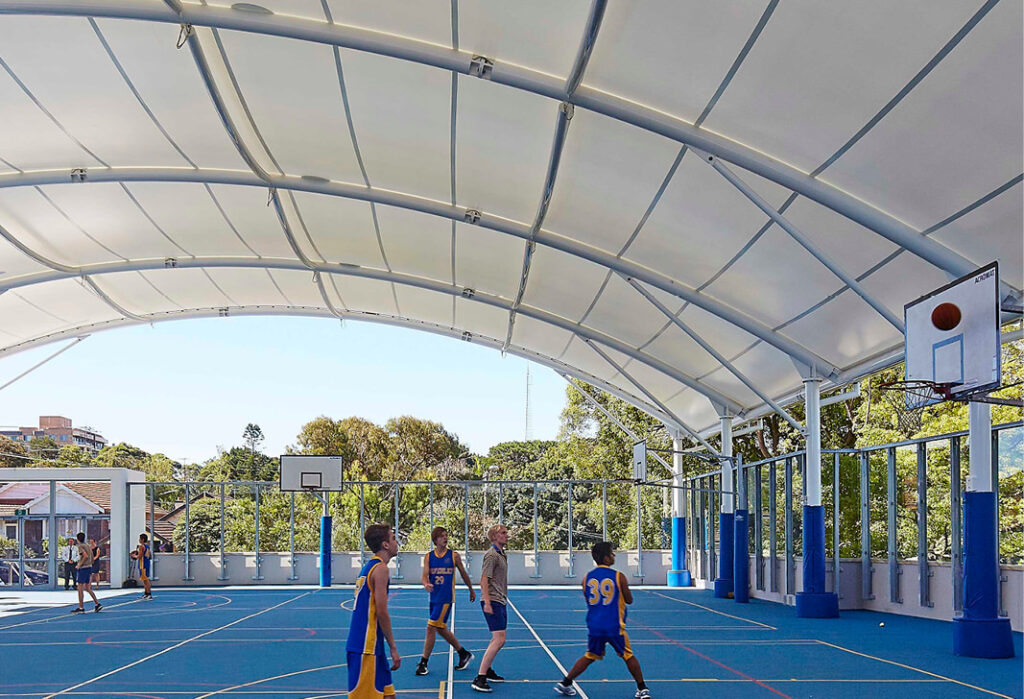
A canopy features a structural frame with a roof and either open sides, mesh or fabric panels. It offers shelter from rain and low light while allowing airflow and natural daylight, ideal for activities that need outdoor surfaces or weather resilience throughout the school year.
Covered canopies also retain the benefits of playing outdoors while improving comfort and consistency. Advanced tensile fabric roofs provide bright, glare-free light and natural airflow, creating a pleasant playing environment without the damp or noise issues that can be associated with hard covers. This means pupils can continue training and competing on familiar outdoor surfaces, even in challenging conditions.
Schools in the UK routinely lose significant outdoor PE and coaching time due to rain, wind and shorter daylight hours. A canopy creates reliable year-round access to core sports surfaces without forcing frequent moves indoors.
There is growing national evidence that time outdoors is essential for pupils’ wellbeing, focus and social development. Research shows that outdoor time has declined by 50 percent in a generation, despite its clear benefits for health, resilience and behaviour. Many settings struggle to provide meaningful sport and outdoor opportunities for pupils because space is either weather-dependent or underused during colder months. Covered canopies help address this gap by creating reliable, sheltered areas that can be used all day long and all year round.
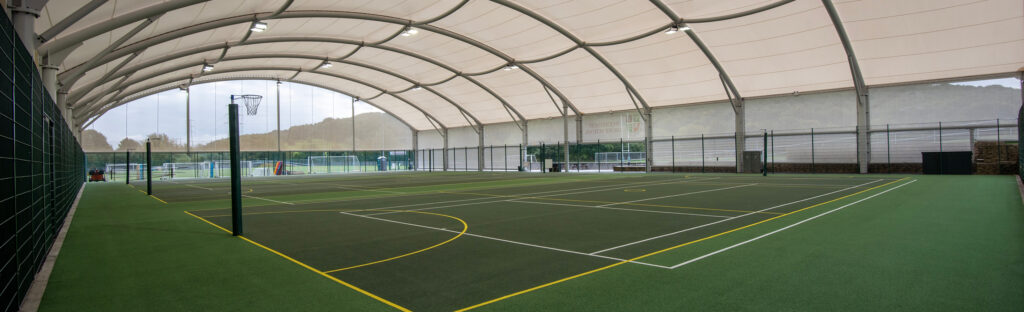
Many schools face limited internal space, with their assembly hall, dining hall, exam hall and sports teaching area all rolled into one, resulting in inevitable double bookings. Outdoor covered areas offer practical solutions, ringfencing time and space for sporting activities to proceed no matter what else might be happening in school that day. Canopies expand the functionality of existing courts and play zones.
One of the biggest advantages for schools is the ability to cover existing courts rather than rebuild them. Long-span steel structures can be installed over current playing areas with minimal disruption, avoiding resurfacing costs and keeping valuable space in use throughout construction. For many sites, this makes a canopy a far more achievable investment than a traditional sports hall.
Canopies are often faster to deliver than full new builds and may avoid the need for a full planning application. The 2021 changes to Permitted Development Rights (PDRs) expanded what schools can build without going through the standard process, depending on site and design. For straightforward canopy installations within existing school grounds, this route can reduce programme time significantly, helping new facilities come into use sooner.
Shorter winter days or darker shoulder months restrict outdoor use. Integrating lighting into a canopy enables schools and colleges to maintain sporting and extracurricular timetables into early evening, supporting boarding settings, community lets and after-school clubs.
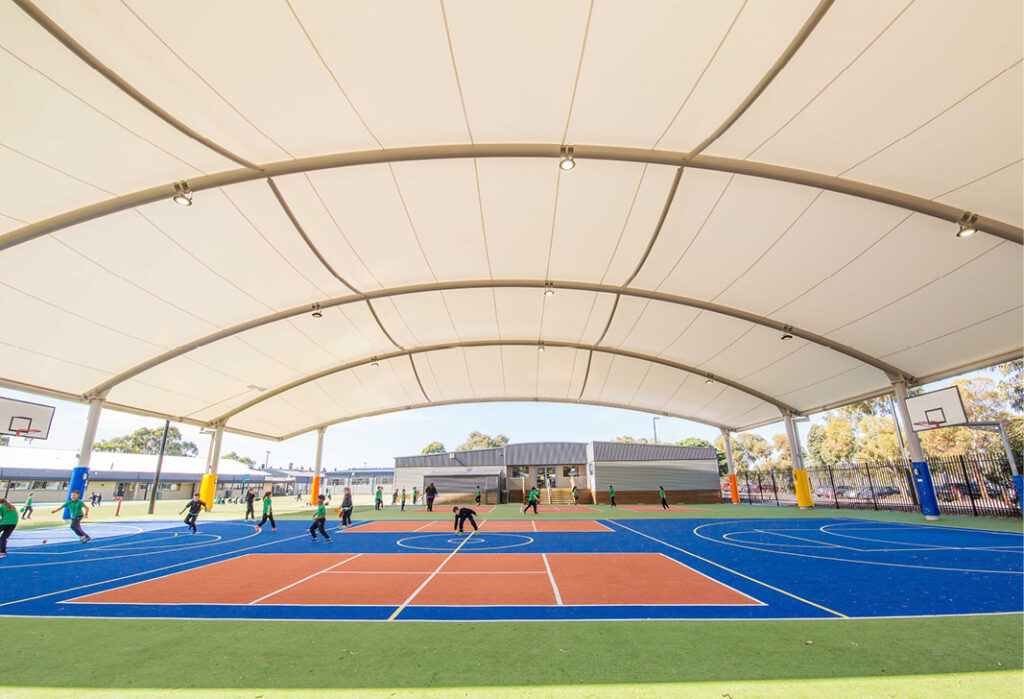
Unlike indoor halls, which may not replicate outdoor conditions, a canopy preserves the use of outdoor playing surfaces while providing protection from the elements. Mesh or fabric side panels allow airflow, which is especially valuable for sports like cricket, tennis and hockey that rely on consistent outdoor conditions.
For schools that do not require a full indoor sports hall, a canopy can offer many of the same benefits at a fraction of the cost. Clear-span frames provide generous playing height, while fabric facades keep out wind and rain without compromising ventilation. This creates a dependable year-round facility that is affordable, low-maintenance and well suited to tight urban sites where footprint and height are critical constraints.
Modern canopy systems are designed with long lifespans, often 25 years or more, and low maintenance due to simple construction and integrated drainage and roofs. For schools facing long-term budget pressures, durability and predictable lifecycle costs are key advantages.
A well-designed canopy can become a prominent asset on site, signalling investment in sport, wellbeing and high-quality infrastructure. This strengthens campus presentation, supports recruitment and reinforces a school’s strategic ambitions around learning environments.