Canopies & Walkways
- All Canopies & Walkways
- Fabric Canopies
-
Polycarbonate Roof
Canopies - Covered Walkways
- Enclosed Canopies
- MUGA Canopies
- Timber Canopies
- Entrance Canopies
Reclaiming Breaktime: Designing Outdoor Space in Secondary Schools
Children in the UK can experience up to 4,000 breaktimes over the course of their primary and secondary education; a substantial amount of time to impact on behaviours, both academically and socially, if the environment works and this time is preserved.
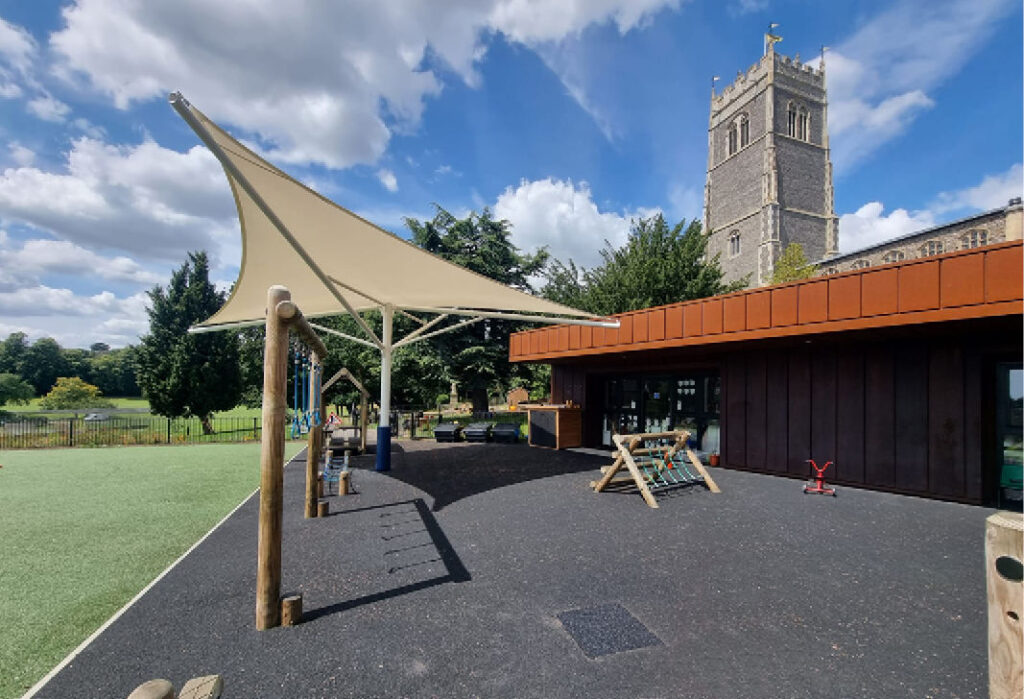
The playground and outside areas on a school campus are one of the few remaining spaces where there is an increased degree of freedom for children. Time spent here offers a vital opportunity for children to interact with peers and develop social skills. However, the length of these breaks is ever reducing.
Raising the Nation Play Commission’s interim report, highlights that despite the immense benefits of breaktimes to children’s development and learning, play time and time spent outside have been squeezed out of the school day over a 25-year period. In fact, the amount of time children spend outside has declined by 50% in a generation.
The evidence and case for free play is clear. For most early years and primary settings, outdoor play is a regular and significant part of the school day and learning experience. Yet, as soon as pupils reach secondary school, this provision is suddenly drastically reduced, despite its well-documented inherent value.
For older pupils, this means fewer chances to build independence, develop resilience through risk-taking and enjoy the physical and mental health benefits that come from unstructured time outside.
Learning through Landscapes report that investing in children’s play is one of the most important things we can do to improve their health and wellbeing. It is shocking therefore, that children are now playing outdoors less than at any point in our history.
Regular access to quality natural spaces can help address some of the most pressing challenges facing children and teenagers, supporting resilience, self-esteem and emotional health. Time outdoors reduces stress, improves mood and helps children to focus, counteracting what has been termed, “nature deficit disorder”, linked to anxiety and attention difficulties. Studies show that outdoor time can help reduce symptoms of depression in adolescents and provide vital relief from exam stress, supporting long-term wellbeing.
A Chartered College of Teaching review highlights that systematic studies have consistently found outdoor learning in natural environments to improve attention, memory and problem-solving, with long-term effects measurable years later.
Longitudinal studies have linked more outdoor time in pre-school to stronger memory and academic outcomes up to a decade later. Teachers reported that pupils were more on-task and required fewer redirects after outdoor sessions, showing the immediate cognitive benefits of learning outside.
For older pupils, regular outdoor time has been shown to improve concentration during revision periods and support academic achievement by enhancing working memory and creativity.
The WWF’s Schools for Nature report, shows that only 24% of UK schools provide daily opportunities for pupils to experience nature, with children in more deprived areas far less likely to have regular outdoor contact. WWF emphasises that nature-rich learning boosts motivation, resilience and behaviour, while also fostering a sense of responsibility for the environment.
In learning outside, children can take ownership of their school grounds, encouraging stewardship and responsibility. Likewise, teenagers who connect with nature in their school years are also more likely to develop lifelong pro-environmental attitudes and sustainable habits.
It is widely observed that outdoor lessons linked to real-world contexts make education more memorable and meaningful, supporting creativity and problem-solving. Unstructured play is vital for coordination, balance and physical development. With increasingly confined and sometimes unsafe neighbourhoods, the freedom to run, climb and explore playscapes at school takes on even greater importance. It is this unstructured play which also helps adolescents experiment with identity, practise decision-making and build confidence in a safe environment.
Our secondary pupils’ experience of play is radically different to their primary counterparts. ‘Play’ doesn’t and shouldn’t look the same at secondary school as it does when pupils are younger.
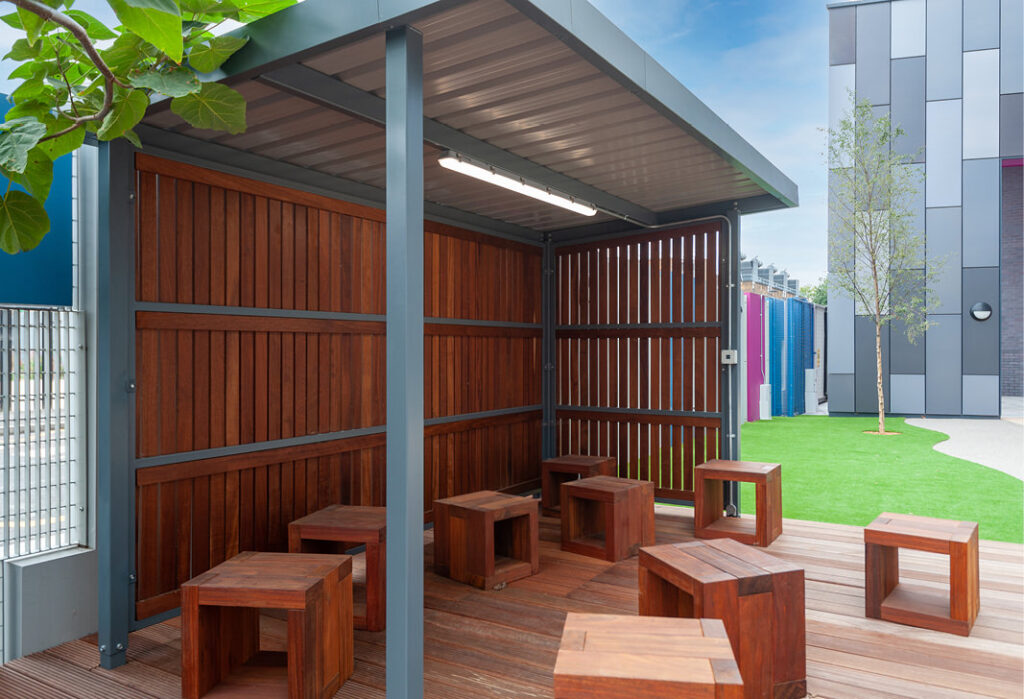
Play is defined in research as, “an activity that is freely chosen and directed by the participants. It is child-led and managed, it is activity chosen for its own self, not for the sake of other outcomes or end.”
Play is fundamental to young people’s quality of life and is now recognised in The United Nations Convention on the Rights of the Child, Article 31. As well as being their right, play is hugely beneficial to pupils of all ages, including those at secondary school. Adolescents who have space to socialise, take positive risks and engage in physical play are better able to regulate emotions, manage stress and form stronger peer connections.
With these benefits in mind, research into secondary school play, describes secondary school ‘playgrounds’ as, “often of the bleak tarmac variety… large open spaces with wind whistling through, with a few seats scattered around”.
The undisputed decline in young people spending time outdoors is attributed to many complex social reasons but key factors include:
School playgrounds are fairly unique places that all children visit on a regular basis, that are free of these very issues. Surely then, our school grounds are the very places where investment should be a priority, providing secondary pupils with opportunities be active, creative and connected with peers, face-to-face?
A systematic review of 147 international studies, found consistent evidence that outdoor learning in natural environments delivers measurable benefits for socio-emotional development, wellbeing and academic progress. As such, outdoor learning should be embedded in every child’s school experience and supported by teacher training. For teenagers, embedding outdoor sessions within the school day can counterbalance long hours indoors, supporting focus, motivation and positive behaviour.
The WWF report warns that over half of secondary schools offer no outdoor learning at all and calls on government to make nature access part of every child’s entitlement. Celebrated children’s author, Michael Rosen, working with the British Psychological Society, has urged schools to protect time and space for play, reminding policy makers that play is a fundamental human right that requires protected time and space.
Schools can only respond to this mass of evidence effectively if the right infrastructure is in place to support outdoor learning, play and socialising.
Research highlights that well-designed school grounds with multiple spaces promote a sense of belonging for pupils and reduce negative behaviours. With thoughtful design, school grounds can meet children’s developmental needs to explore, collaborate, socialise and learn. Features such as natural planting, varied surfaces and smaller, cosy areas allow adolescents to feel safe, find privacy when needed and build social confidence.
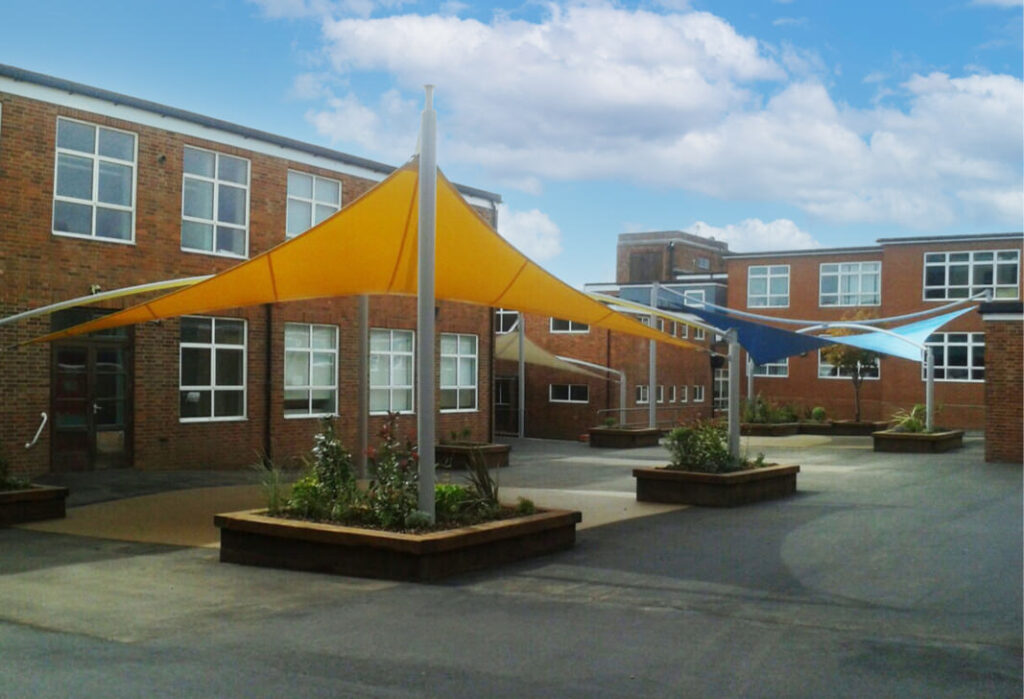
Safe, zoned spaces within school grounds give teenagers the freedom to try out new activities or behaviours in the company of trusted friends. These spaces can act as safe social laboratories where pupils can practise leadership, collaboration or negotiation and develop confidence in social scenarios.
For many adolescents, particularly those who may feel self-conscious in open playgrounds, these sheltered spaces make it easier to take part in physical activity, share creative ideas, or build new friendships. The Learning through Landscapes report, notes that secondary aged girls, who are often less engaged in formal PE lessons, are more likely to be active in informal, social settings. Activities such as walking, dancing and jumping with friends at breaktime are often more appealing than structured sports.
The report highlights that well-designed outdoor spaces, with opportunities for informal play, can encourage higher participation and physical activity than a traditional PE class. They also help pupils manage the social risks of adolescence by providing settings where trust and support are easier to establish.
A two-pronged solution for schools looking to address their outside space provision would include developing:
Effective shelters, canopies and walkways can provide schools with much needed opportunities to ‘zone’ their outside areas, encouraging real time for pupils to regulate and socialise with peers.
Many designs can help to weatherproof parts of the school environment, meaning pupils can be outside for longer, still accessing the benefits of the great outdoors, despite the weather (NOBODY loves a “wet-play” on a Friday afternoon, teachers even less than pupils).
Well-designed shades and canopies can also provide UV protection to further enhance free time and safer outdoor learning opportunities.
You can find out more about some of the solutions available for schools looking to invest in their outdoor provision, here.